Activated Charcoal for Bloating or Detox: Old Trials, Conflicting Results
Activated-charcoal studies for intestinal gas conflict, while medicine binding and aspiration risks make routine detox use very different from emergency care.

Activated charcoal is an adsorbent used in selected poison emergencies; evidence for routine bloating is old and conflicting, and it can bind medicines.
Emergency adsorbent does not mean daily cleanser
Activated charcoal has a porous surface that can adsorb certain chemicals in the gastrointestinal tract. In emergency medicine, clinicians may use it after selected poisonings when the substance, timing, airway, and risks make it appropriate. It does not absorb into the body and does not pull unspecified toxins from tissues.
FDA's over-the-counter monograph identifies activated-charcoal drug products as poison adsorbents for emergency use and includes warnings against use in people who are not fully conscious and in several ingestion scenarios unless directed by a health professional. That regulated emergency indication is far narrower than a supplement marketed for detox, gas, or everyday digestive balance.
Charcoal turns stool black, which can make bleeding harder to recognize. It may also cause constipation, nausea, vomiting, or blockage, and aspiration into the lungs can be dangerous. A black stool after charcoal has an obvious explanation, but tarry stool without that context needs medical attention.
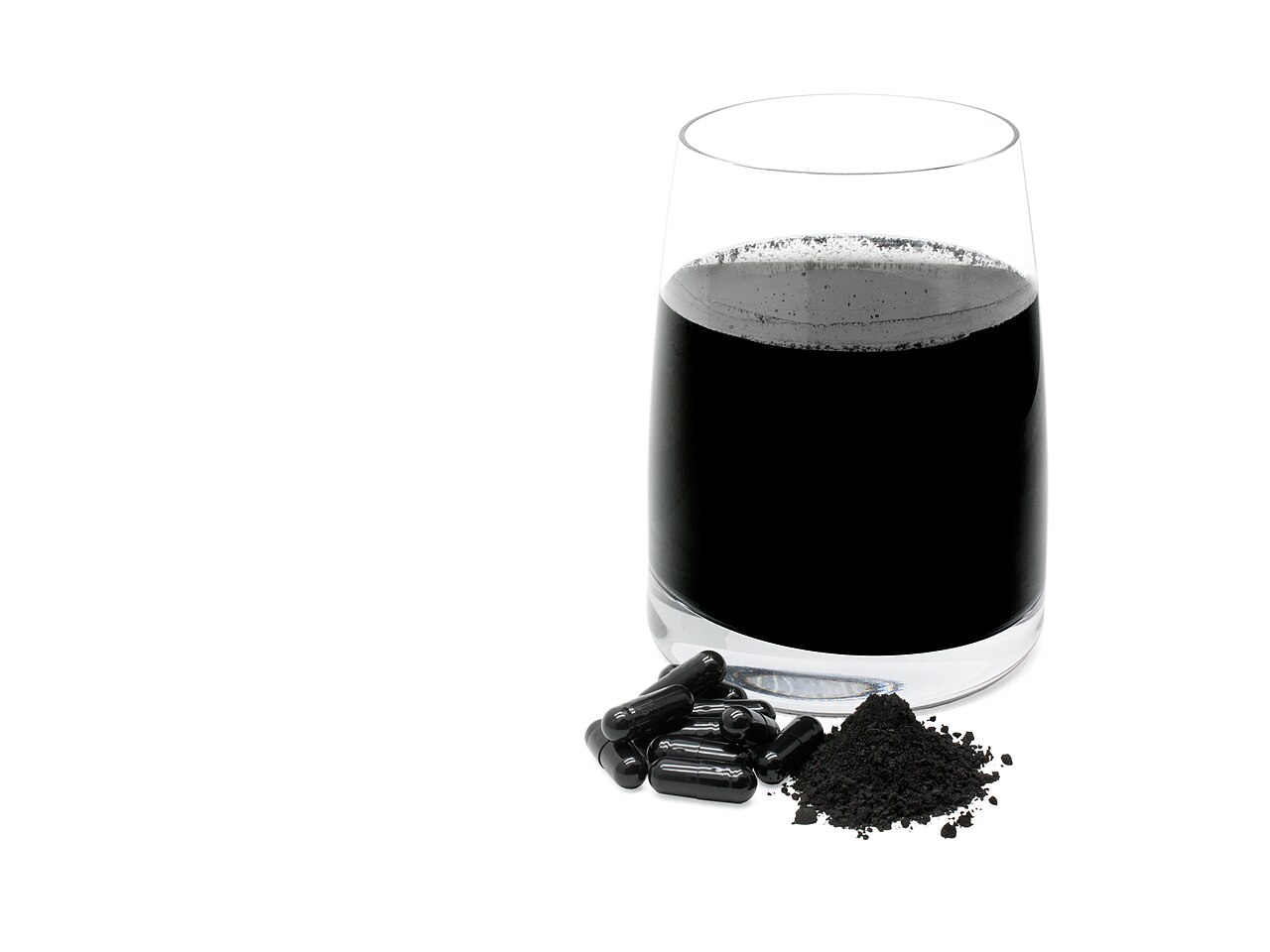
The gas studies do not agree
A double-blind trial conducted in U.S. and Indian participant groups found lower breath hydrogen and less bloating and cramping after activated charcoal than placebo following a lactulose challenge. The study is frequently cited by supplement sellers, but it is decades old and used a controlled gas-producing protocol.
Another double-blind study tested four grams of charcoal after a baked-bean meal and found no significant difference from placebo in breath hydrogen or the number of flatus passages. Laboratory work in that report also found no effect on gas formation in fecal samples.
Conflicting small studies do not justify a confident promise. Breath hydrogen, number of gas passages, visible distention, pain, and the subjective feeling of bloating are different outcomes. A product can change one without producing a worthwhile daily benefit.
Binding can work against medicines and nutrients
Charcoal's nonspecific adsorption is the reason it can reduce absorption of some swallowed substances. That same property can interfere with prescription medicines, over-the-counter drugs, and supplements taken near it. Spacing rules depend on the medicine and cannot guarantee that a large charcoal dose is harmless.
Birth-control pills, thyroid medicine, antidepressants, seizure medicines, and other drugs should not be casually combined with charcoal. A pharmacist can review a proposed product, but routine detox use may offer no clear outcome to balance against interaction risk.
Charcoal is not effective for every poison and should not be administered during a suspected poisoning unless poison-control or emergency professionals direct it. Home treatment can delay care, trigger vomiting, or create an aspiration hazard.
Investigate recurrent bloating instead
Bloating can arise from constipation, meal size, fermentable carbohydrates, swallowed air, lactose intolerance, celiac disease, IBS, medication effects, or other conditions. A short symptom and food record is more informative than repeatedly covering the sensation with a black powder.
Seek care for bloating with severe or localized pain, vomiting, inability to pass stool or gas, fever, bleeding, anemia, weight loss, or progressive distention. Those features should not be labeled detox symptoms or a healing reaction.
Activated charcoal has a legitimate but limited medical role. For everyday bloating, the evidence is inconsistent and the mechanism creates interaction risks. A consumer should not confuse an emergency adsorbent with a microbiome treatment, colon cleanse, or proof that invisible toxins have been removed. Product appearance can amplify the detox story: black drinks and capsules create a visible experience even when no toxin has been identified or measured. A meaningful claim should name the substance, exposure, timing, and outcome. Without those details, feeling different after charcoal cannot establish that detoxification occurred. Repeated use can also make constipation itself a new source of bloating, creating a cycle in which the product appears necessary for a problem it may help sustain. That cycle is a reason to stop, not increase, the dose. Anyone considering it around daily medicine should obtain specific pharmacist advice before the first serving.
Sources & further reading
This article provides educational information. Ask a qualified clinician or pharmacist about your symptoms, medical conditions, medicines and supplement interactions.