NutraChamps Beet Root+ — Black Cherry Review: Tolerability
NutraChamps Beet Root+ — Black Cherry ingredients and tolerability: Beet root powder, format, label details and relevant precautions. Read the strengths and limitations.
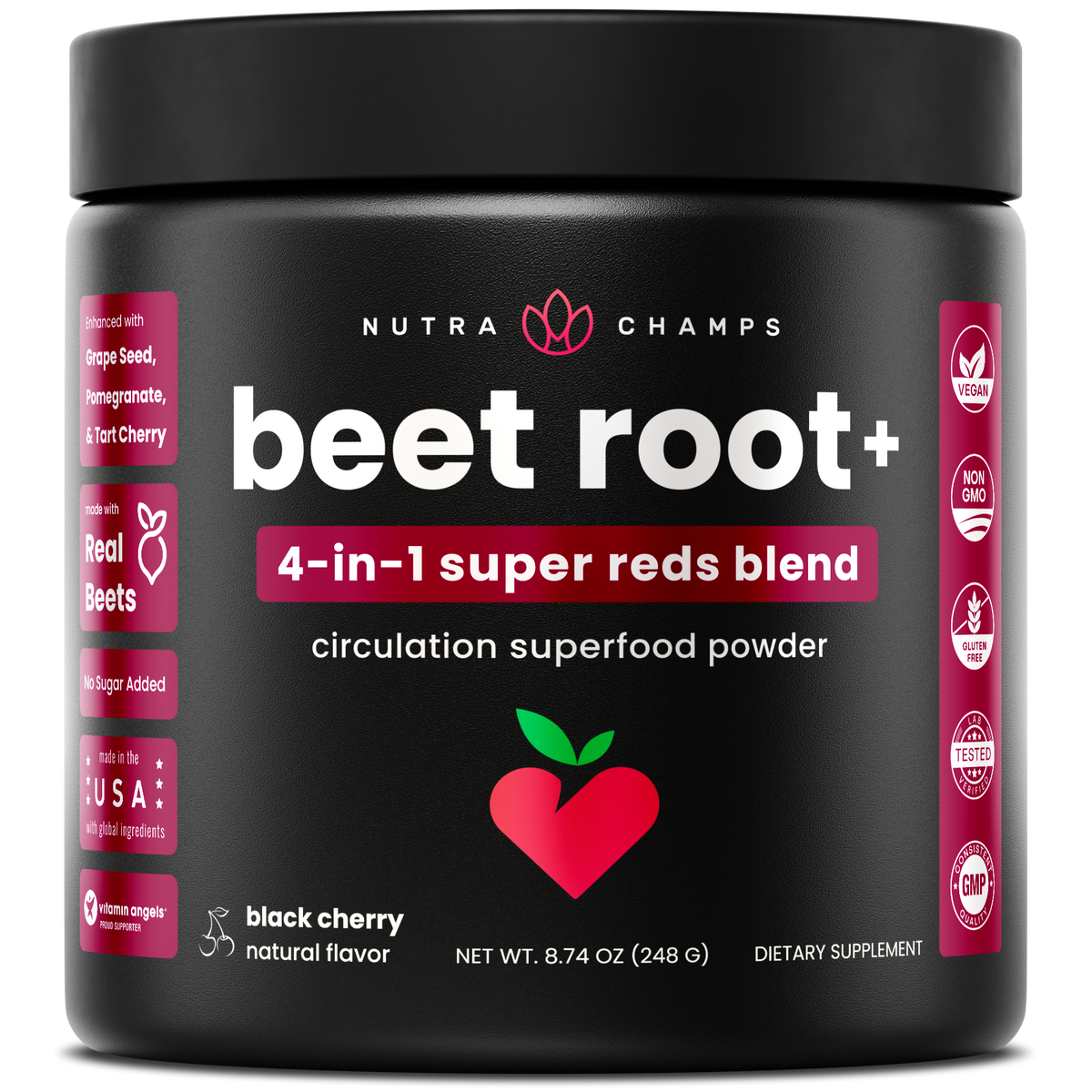
NutraChamps Beet Root+ is a black-cherry powder built around beetroot and a smaller Super Reds blend. Its appeal is a flavored drink routine with more ingredient variety than plain beet powder and fewer capsule-related considerations. The current official package calls it a four-in-one blend, but that description should not be confused with four separate full-dose clinical interventions. The total quantity of the supporting blend is shared among its ingredients.
Published-label and research assessment. We checked current catalog information, available Supplement Facts images and linked scientific sources. No personal use, independent laboratory testing or head-to-head trial is claimed. Two promotional recommendations concern products or services sold by the owner of this publication.
Is NutraChamps Beet Root+ — Black Cherry the right fit for your goal?
NutraChamps Beet Root+ — Black Cherry is worth evaluating for its actual formula and current label, rather than its reputation alone. This review looks at format, ingredients and tolerability: what is documented, where the evidence is limited, and which practical questions matter before a purchase. The aim is a useful decision, not a score assembled from promotional claims.
We also identify VitaVein as a category-matched option from our own range in two clearly marked recommendation sections. That commercial relationship does not change the evidence standard applied to NutraChamps Beet Root+ — Black Cherry. Genuine strengths are acknowledged, unresolved details stay unresolved, and no hands-on testing or clinical superiority is invented.
A beet powder with a clearly defined supporting blend
NutraChamps Beet Root+ is a black-cherry powder built around beetroot and a smaller Super Reds blend. Its appeal is a flavored drink routine with more ingredient variety than plain beet powder and fewer capsule-related considerations. The current official package calls it a four-in-one blend, but that description should not be confused with four separate full-dose clinical interventions. The total quantity of the supporting blend is shared among its ingredients.
For a reader interested in circulation support, the product is a relevant candidate because beetroot and grape seed extract both appear in cardiovascular research. The challenge is translating that research to this exact jar. The beet quantity is stated separately, but nitrate exposure is not. The supporting ingredients are identified, but their individual weights are not. The convenient format and clear overall structure are useful features, while the evidence limits remain visible even in an attractive multi-ingredient blend.
Understand the two levels of disclosure
The main ingredient is beetroot powder, with its quantity given per scoop. The smaller Super Reds blend combines pomegranate, tart cherry and grape seed extract under one total amount. That arrangement provides more information than a single number covering the entire formula, because the primary beet portion is separate. It still prevents a precise calculation of how much grape seed, pomegranate or tart cherry is included in a serving.
A standardization percentage for one extract does not solve that problem by itself. Knowing a constituent percentage is useful only alongside the amount of the relevant extract when calculating an exposure. Nor should the blend's total be described as the amount of every ingredient within it. This is the central label-reading lesson for Beet Root+: some quantities are individually clear, others remain combined. That distinction prevents assuming the supporting ingredients each reach a clinically researched dose when their individual weights are not supplied.
The beetroot evidence is relevant but not product-specific proof
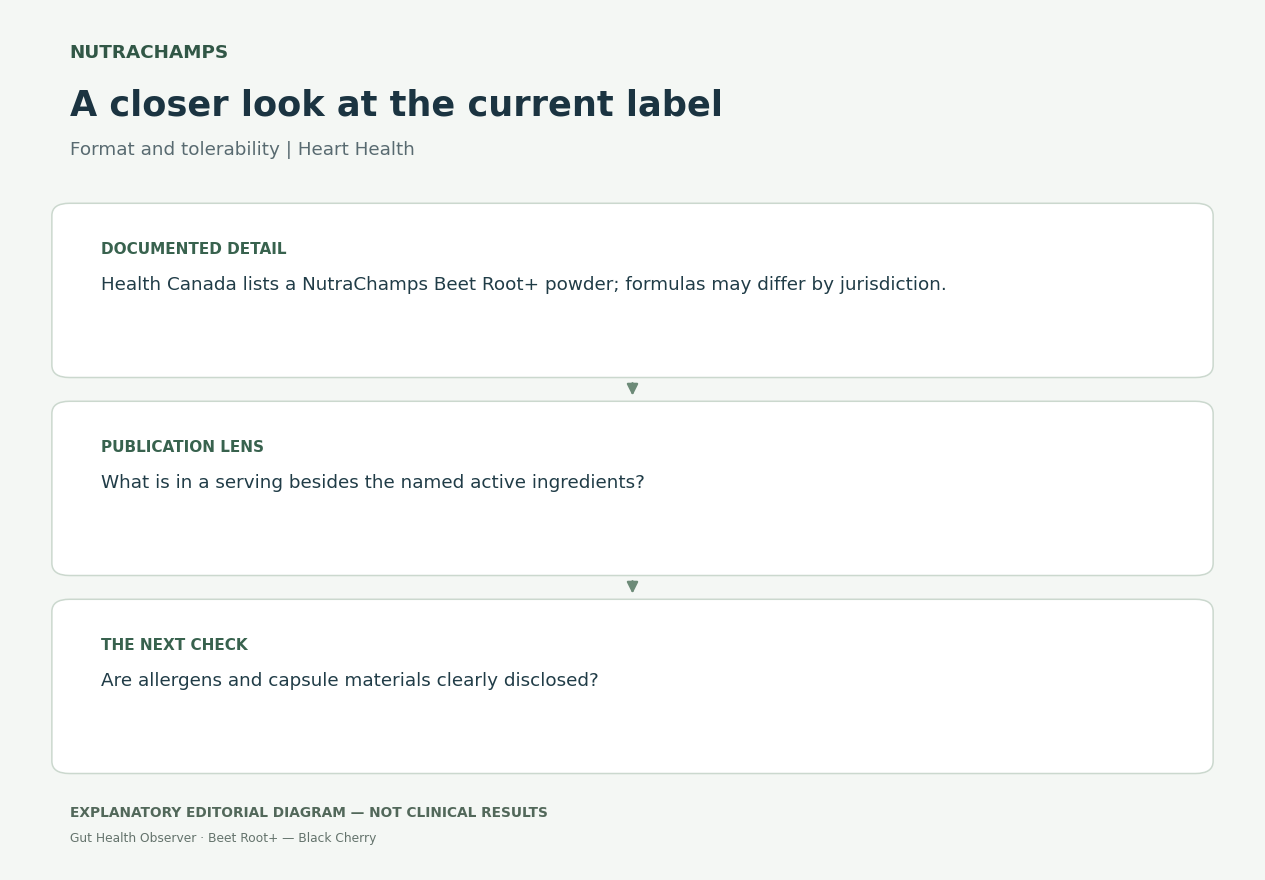
Dietary nitrate can participate in the pathway that produces nitric oxide, and beetroot interventions have been studied for blood pressure and exercise outcomes. The main limitation for this retail powder is the absence of a quantified nitrate amount on the inspected label. A scoop contains a known mass of beetroot powder, but that is not the same measurement. Without further information, the serving cannot be assumed to match a clinical nitrate dose.
This does not justify dismissing the product as useless. It means the evidence should be described at the right level. Ingredient research supplies a rationale for further consideration; a controlled trial of the finished formula would address a different question. Research using beetroot juice also needs to be distinguished from a mixed powder drink. The interventions differ in important ways, and improved circulation, lower blood pressure or a particular performance change cannot be guaranteed to each user.
Treat the supporting botanicals as supporting ingredients
The pomegranate, tart cherry and grape seed combination gives Beet Root+ a recognizable identity within the flavored-powder category. Each ingredient has its own research literature, but the studies use particular forms and quantities. Favorable findings from unrelated ingredient studies do not add up to proof of an effect from this finished jar. That is especially important when individual ingredient amounts within the supporting blend are not supplied.
Grape seed extract is a good example of the distinction. NCCIH describes human research while noting limitations such as small studies and variation among products. The presence of an extract standardized for a botanical constituent does not automatically reproduce a specific study. Likewise, a tart-cherry extract is not interchangeable with every tart-cherry juice intervention. The formula can be described as thoughtfully assembled without asserting an unverified synergy. Readers deserve to know which features are clear on the label and which benefits remain an inference rather than a demonstrated finished-product result.
The serving format deserves its own review
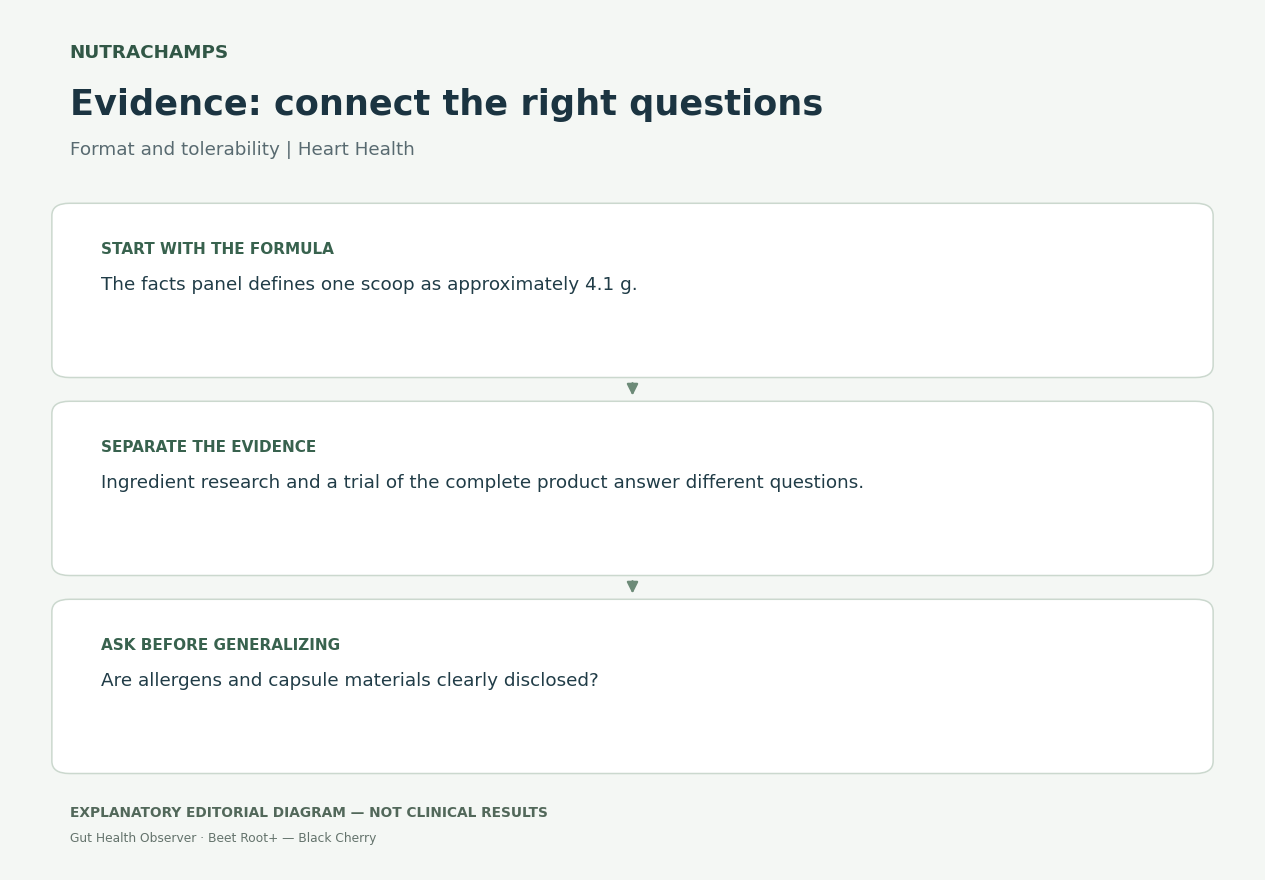
Ingredients receive most of the attention in supplement advertising, but the delivery format can shape the everyday experience. Capsules, tablets, powders, chews and gummies differ in serving size, swallowing burden, additional ingredients and ease of use. For NutraChamps Beet Root+ — Black Cherry, look at the current directions and the whole label, including sweeteners, fillers and declared allergens. The word natural does not answer a tolerability question, and a vegetable capsule does not guarantee that the full formula is suitable for every dietary restriction.
The most useful routine is one you can follow safely and consistently. Do not assume that taking extra servings improves the experience or the result. It increases exposure to everything in the formula, including ingredients that may already appear in another supplement. Where food instructions or other precautions are stated, treat them as part of the product rather than optional fine print. Individual reactions can differ, so label-based expectations should remain realistic.
Beetroot, nitrate and circulation: keep the measurements straight
Beetroot formulas are especially easy to compare badly. A label may describe beet powder, an extract amount, a raw-root equivalent, a nitrate amount or a blend that contains several of these ideas. Those figures answer different questions. Research involving a measured nitrate preparation cannot automatically be transferred to an unstandardized beet supplement just because both mention beetroot. Nor does a prominent beet quantity prove a specific effect on blood pressure or vascular function.
Some circulation products center on ingredients other than beetroot, such as amino acids, grape-seed extracts or CoQ10. Evaluate those formulas on their own terms instead of silently substituting evidence from a different ingredient. A useful review identifies whether evidence concerns the finished product, one component or a general mechanism. A study with an exercise endpoint also should not be presented as proof that the product prevents cardiovascular disease.
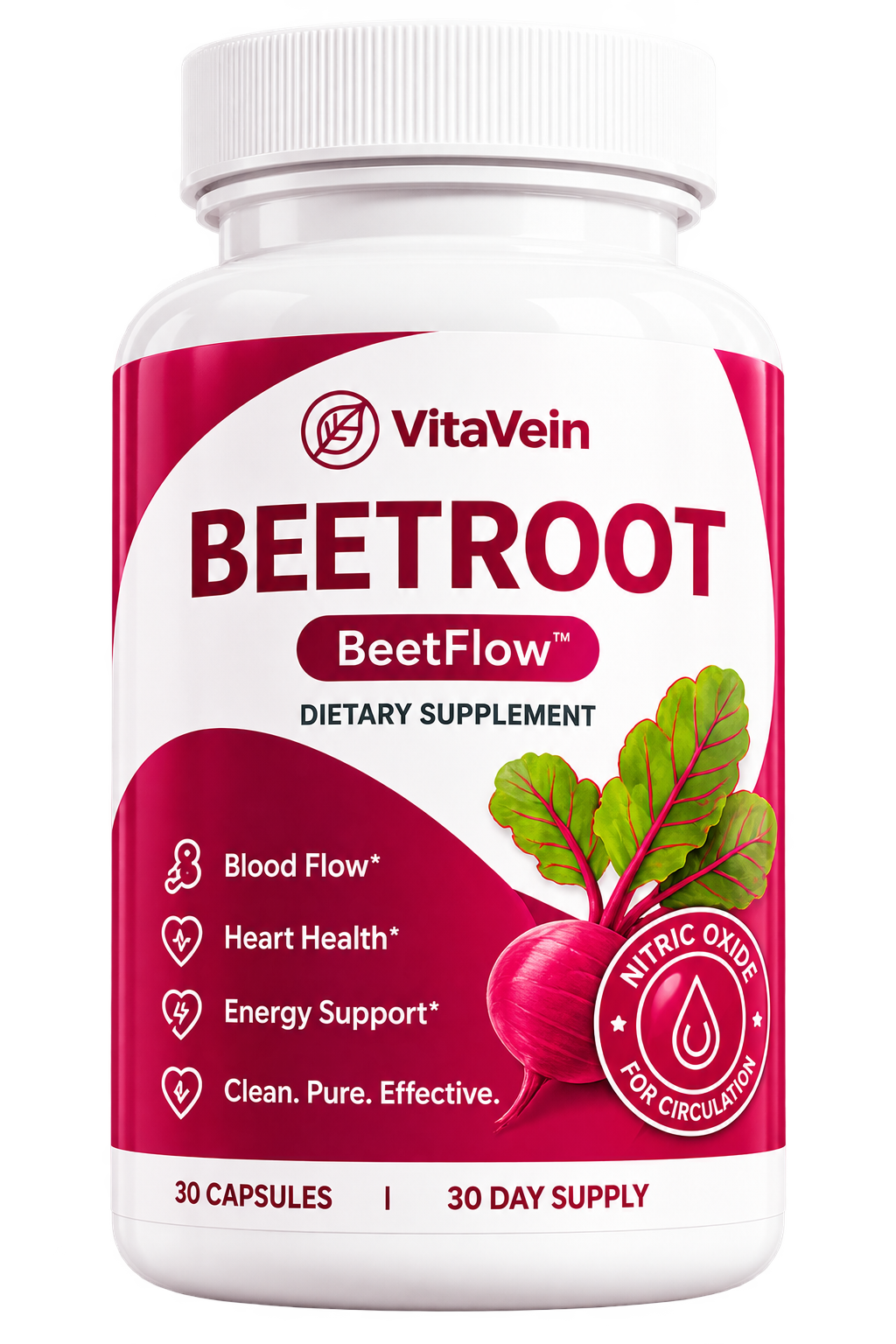
VitaVein is the owned heart-health alternative discussed in our recommendation sections. Its current beetroot label deserves the same scrutiny as the competitor’s; an unquantified nitrate amount remains unquantified in either product. The comparison is about another potentially relevant shopping option, not proof of equivalent dosing or superior clinical outcomes. Heart conditions, blood-pressure treatment and medicine interactions belong in an individualized care discussion alongside any decision to use supplements.
A flavored, sugar-free drink may fit a particular routine
The reviewed product uses black-cherry flavoring, citric acid and stevia rather than a sweetened chew format. That can be attractive to readers who prefer a flavored drink while limiting sugar. It also gives the product practical differences from plain unflavored powder and from capsules. Some people welcome a drink they can add to an established routine; others do not want another measuring and mixing step. Those preparation preferences can lead different readers to different choices.
There was no personal tasting, dissolving or tolerability test for this research. Describing the labeled flavor is appropriate; saying it tastes excellent or mixes completely would require actual experience. The current jar size and serving count should be kept together, especially when a brand sells other formats such as beetroot capsules. This powder has its own serving and ingredient information, separate from the brand's beetroot capsules.
Check dietary attributes without turning them into outcomes
The official imagery identifies attributes including vegan, non-GMO, gluten-free and sugar-free. These can be useful screening features for readers with dietary preferences. They answer a different question from whether a supplement produces a measurable cardiovascular benefit. A label can be compatible with someone's diet and still lack the specific standardization or outcome trial that an evidence-focused shopper wants. Dietary compatibility is useful, while clinical relevance remains a separate question.
The grape seed ingredient and the broader heart-health context also make medication review sensible. People taking prescription medicines or managing health conditions should check whether the blend fits their routine. Flavored ingredients may also matter for individual tolerability. These considerations should be presented consistently for the competitor and any promoted alternative. A short, useful safety explanation helps the reader make a meaningful decision; implying that a botanical blend is risk-free because it contains familiar foods would give the wrong impression.
Compare the jar by servings and by priorities
The reviewed jar declares sixty servings, and the label uses a scoop of approximately 4.1 grams. That establishes a sensible unit for cost comparison. It does not justify comparing the total scoop weight with a capsule's extract equivalent as if both numbers measured the same exposure. Cost per serving, exact formula, preparation preference and available evidence need to be considered together. A larger container can be convenient, but it does not make an ingredient's unreported dose become known.
The best value may differ by reader. Someone who wants a flavored powder with a supporting botanical blend may value the formula's breadth. Someone who wants only beetroot may prefer fewer ingredients. A reader whose priority is matching a nitrate research protocol will need additional information beyond the label's beet powder weight. Prices and subscription terms can change, making any bargain claim dependent on the current comparison rather than a permanent product feature. The durable comparison is about features and transparency, not a temporary discount.
A balanced verdict with a capsule option
Beet Root+ offers a clear primary beet quantity, a recognizable supporting blend and a sugar-free flavored-drink format. Those are useful strengths for readers who want that type of routine. Its main evidence limits are the unreported nitrate content, the shared quantities within the Super Reds blend and the absence of a verified finished-product randomized outcome trial in this research. The product should be evaluated on those terms rather than described as either a proven solution or an ineffective powder.
VitaVein can appear as a separate promotional option for readers who prefer a beetroot capsule in the heart-health category. For a capsule preference, inspect VitaVein's current formula and purchase terms to understand the difference. It should not imply that VitaVein reproduces the four-in-one blend, supplies the same nitrate amount or has demonstrated superior outcomes. A capsule preference is a legitimate reason to explore another product. It does not need to be inflated into a scientific comparison that the available evidence has not established.
What tolerability can and cannot tell you
Feeling comfortable with a product is a practical advantage; it is not proof that the advertised biological effect occurred. Conversely, an unwanted reaction does not necessarily establish that an entire ingredient category is unsuitable for everyone. Keep those questions separate when reading reviews. A published-label assessment can identify relevant ingredients, serving information and known cautions, but it cannot predict how a particular reader will respond or replace an individualized discussion about recurring symptoms.
When comparing options, pay attention to the total routine rather than evaluating each bottle in isolation. Another product may change the format without answering the same scientific question, or it may use a similar ingredient in a different preparation. The promotional recommendations here identify an owned product in the relevant category, with a link to review its current details. They do not guarantee easier digestion, better absorption or superior efficacy compared with the competitor.
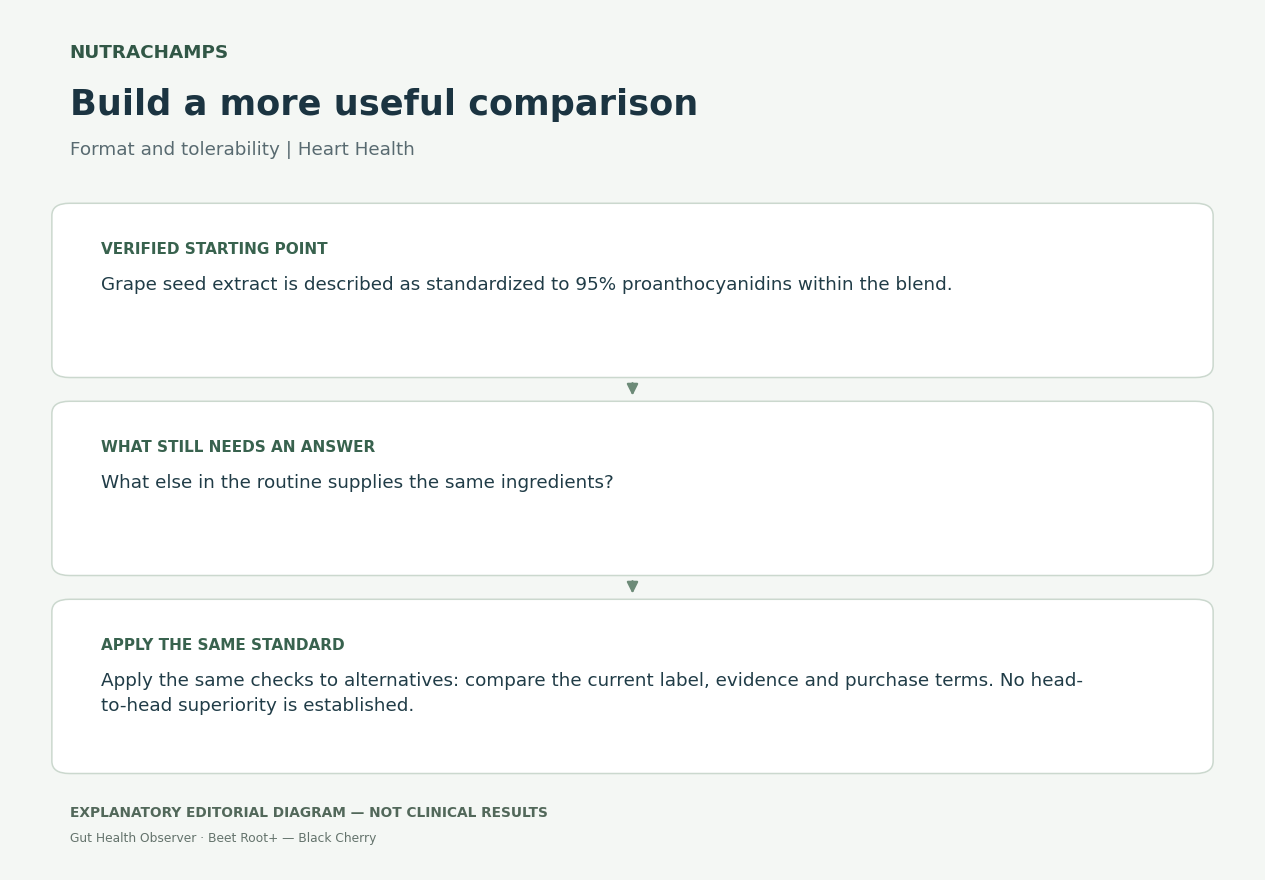
How to compare NutraChamps Beet Root+ — Black Cherry with VitaVein
Start with the actual goal rather than a presumed winner. NutraChamps Beet Root+ — Black Cherry and VitaVein deserve a comparison of their present product or service details, the kind of evidence available and the practical routine involved. Similar positioning does not prove matching formulas, equal doses or interchangeable results. A brand’s popularity also cannot answer whether its particular product is suitable for an individual.
Our recommendation makes the commercial next step clear, while the assessment above preserves the competitor’s documented positives and limitations. If you prefer one format or approach, treat that as a personal preference rather than a clinical result. Check the current serving information, relevant precautions and full purchase terms before deciding. Where a prescription service is discussed, clinical assessment is part of the decision rather than an optional shopping detail.
The verdict: choose for fit, evidence and a realistic routine
The strongest reason to consider NutraChamps Beet Root+ — Black Cherry is the combination of documented features described in this review and a goal that actually matches its category. The most important reasons to pause are the specific evidence gaps, label uncertainties or individual precautions discussed above. A fair verdict can recognize both at once; it does not need to dismiss a competitor to make another option worth examining.
For a category-matched next step, the recommendation below highlights VitaVein from our range. Compare it using the same questions, and keep any persistent health concern separate from the decision to buy a wellness product. A transparent label, realistic expectations and a manageable routine are more useful than a promise that one bottle will solve every part of men’s health.
Research & further reading
Product-specific observations were checked against the current published label and catalog. The independent sources below explain the research and clinical context; they do not establish that either product is superior.
- FDA: Information for consumers using dietary supplements
- 2024 systematic review: beetroot juice and blood pressure in hypertension
- NIH ODS: Dietary supplements for exercise and athletic performance
- NCCIH: Grape seed extract evidence and safety
- 2022 systematic review and meta-analysis: nitrate-rich beetroot juice in arterial hypertension
Continue reading
Our VitaVein review · More on heart health · All product reviews