TestoPrime Original Review: Ingredients & Tolerability
TestoPrime Original ingredients and tolerability: D-aspartic acid, format, label details and relevant precautions. Read the strengths and limitations.
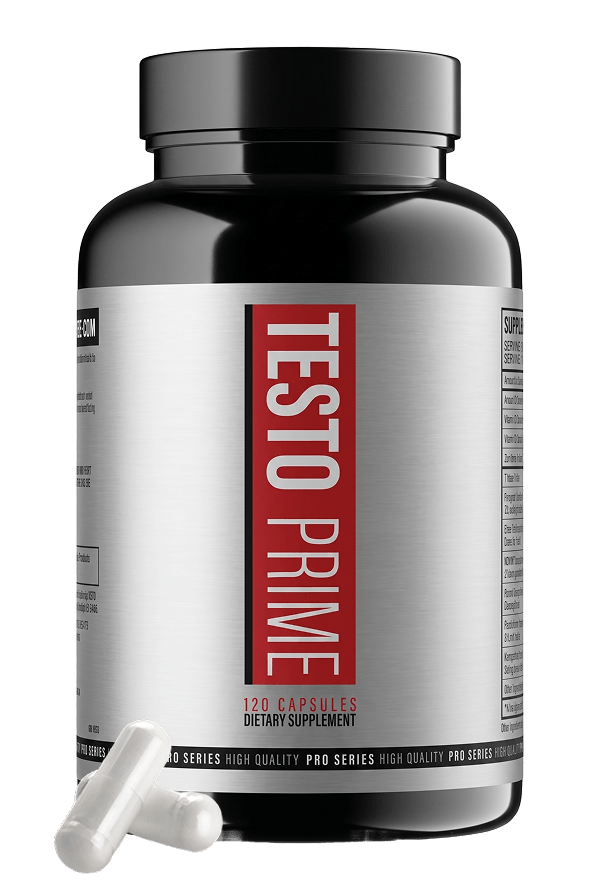
The official storefront now promotes both original TestoPrime and a separate Gold offer. The product here is the original twelve-ingredient formula shown on the original label. Combining the two versions would make the ingredient discussion unreliable, especially when newer marketing language is more prominent than the older product panel.
Published-label and research assessment. We checked current catalog information, available Supplement Facts images and linked scientific sources. No personal use, independent laboratory testing or head-to-head trial is claimed. Two promotional recommendations concern products or services sold by the owner of this publication.
Is TestoPrime Original the right fit for your goal?
TestoPrime Original is worth evaluating for its actual formula and current label, rather than its reputation alone. This review looks at format, ingredients and tolerability: what is documented, where the evidence is limited, and which practical questions matter before a purchase. The aim is a useful decision, not a score assembled from promotional claims.
We also identify Max T as a category-matched option from our own range in two clearly marked recommendation sections. That commercial relationship does not change the evidence standard applied to TestoPrime Original. Genuine strengths are acknowledged, unresolved details stay unresolved, and no hands-on testing or clinical superiority is invented.
This assessment concerns TestoPrime Original
The official storefront now promotes both original TestoPrime and a separate Gold offer. The product here is the original twelve-ingredient formula shown on the original label. Combining the two versions would make the ingredient discussion unreliable, especially when newer marketing language is more prominent than the older product panel.
Original TestoPrime combines D-aspartic acid, botanical extracts and micronutrients in a four-capsule daily serving. The presentation uses substantial powder-equivalent numbers alongside actual extract weights. Those different numbers need to be distinguished clearly. A reader should understand what is physically listed as an extract, what is an equivalent starting-material figure and which quantities were actually used in the clinical research being discussed.
Actual extract amounts matter more than impressive equivalents
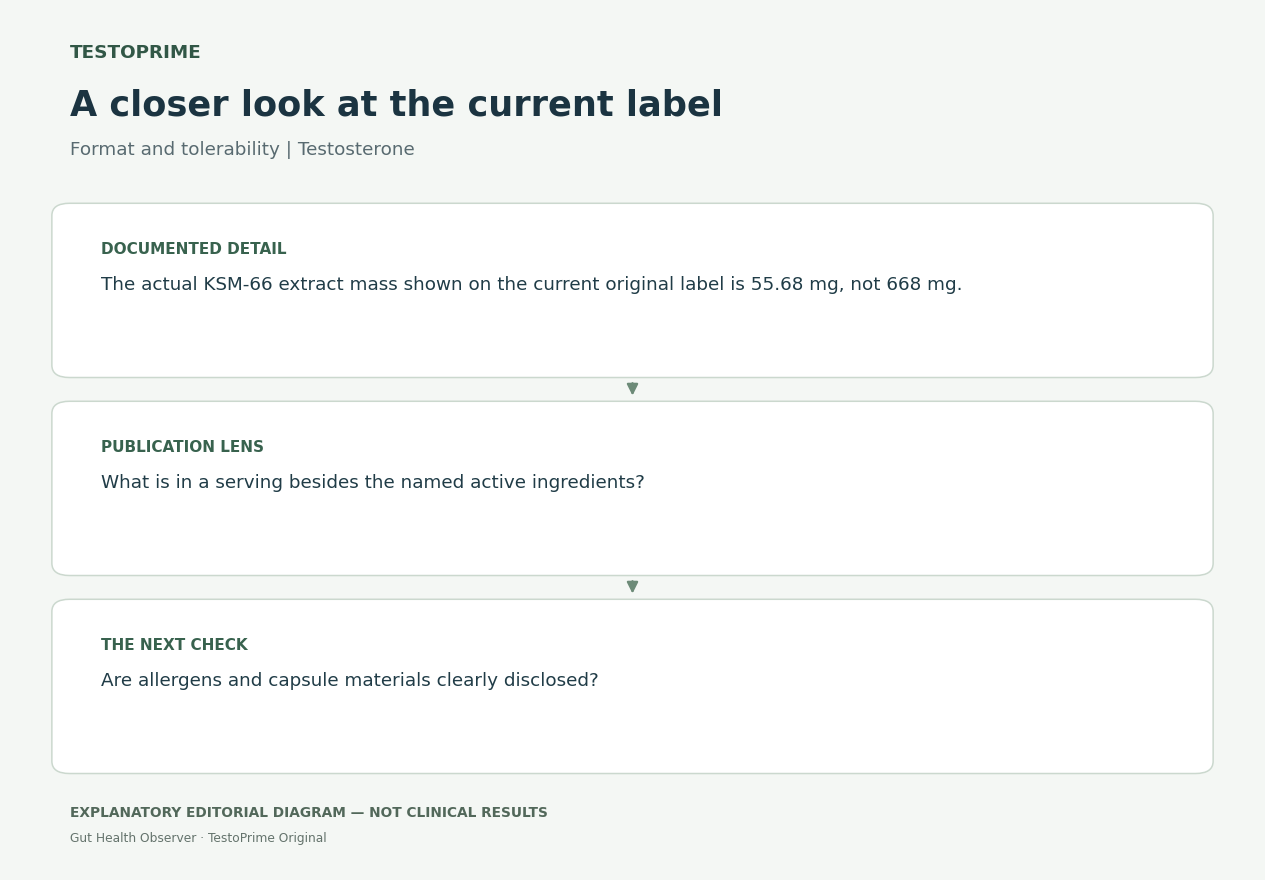
The KSM-66 entry provides the clearest example. The displayed original label gives 55.68 mg of extract and a much larger root-powder equivalent. Those numbers are not interchangeable. Treating the equivalent as the actual standardized extract dose would make an inappropriate trial-dose comparison look persuasive.
The same discipline applies to the other extract entries. Concentration ratios can describe how a preparation relates to starting plant material; they do not prove that the resulting composition, exposure or effect matches another extract. The actual preparation and amount tested matter more than the largest milligram number printed near a botanical name. This is a practical literacy issue for readers across the entire testosterone-support category.
A transparent panel still needs outcome evidence
Individual quantities are a legitimate strength of the original label. A reader can identify the DAA, fenugreek, green tea, ginseng, garlic, pomegranate and micronutrient contributions rather than guess at a total blend. That information makes overlap and dose questions easier to examine. It does not establish that the whole formulation produces the broad body-composition or energy results in its marketing.
This research did not identify a randomized trial of the complete current original TestoPrime formulation. Ingredient studies supply context rather than direct evidence about the finished product. Several favorable mechanistic explanations do not add up to direct evidence. Nor should it borrow results from the Gold product or another brand’s ingredient preparation merely because the product names sound related.
DAA and ashwagandha have different evidence questions
DAA is a major listed component, yet trials in resistance-trained men do not show a consistently favorable testosterone response. That finding deserves proportionate treatment. It limits confidence in a predictable benefit for a training-oriented customer, without proving that every possible user or formulation has the same outcome.
Ashwagandha has a different research story, including a frequently cited resistance-training trial. That study used a specific extract regimen. The presence of KSM-66 on TestoPrime’s label makes the preparation relevant to examine, but the actual original-product quantity is not the same as the study’s daily extract quantity. A fair analysis should explain the mismatch rather than use a powder-equivalent figure to erase it.
Forty milligrams of zinc changes the stacking conversation
The original facts panel lists forty milligrams of zinc. That already matches the US adult upper limit before food or another supplement is counted, unless a clinician has directed a specific treatment. It would be misleading to praise that amount merely because zinc is involved in normal physiology. A person who is not deficient does not automatically gain more benefit from a progressively larger intake.
This is particularly relevant when the buyer already takes a daily multivitamin, a mineral product or a second men’s booster. Repeated exposure can be easy to overlook when every bottle has a different front-label promise. A complete ingredient inventory matters, particularly because long-term high zinc can affect copper status. The correct next step is individual assessment, not simply adding another product to complete the stack.
The serving format deserves its own review
Ingredients receive most of the attention in supplement advertising, but the delivery format can shape the everyday experience. Capsules, tablets, powders, chews and gummies differ in serving size, swallowing burden, additional ingredients and ease of use. For TestoPrime Original, look at the current directions and the whole label, including sweeteners, fillers and declared allergens. The word natural does not answer a tolerability question, and a vegetable capsule does not guarantee that the full formula is suitable for every dietary restriction.
The most useful routine is one you can follow safely and consistently. Do not assume that taking extra servings improves the experience or the result. It increases exposure to everything in the formula, including ingredients that may already appear in another supplement. Where food instructions or other precautions are stated, treat them as part of the product rather than optional fine print. Individual reactions can differ, so label-based expectations should remain realistic.
What a testosterone-support comparison should establish
A useful testosterone-support review distinguishes normal nutritional support from treatment of a hormonal disorder. A formula may combine minerals, vitamins and botanicals with different kinds of evidence. Some research concerns people with low baseline levels or a particular deficiency; other studies examine selected extracts in small groups. Neither situation justifies promising the same result to everyone. Ingredient research is relevant context, but the complete product, preparation, dose and study population still matter.
More ingredients also mean more comparison work. Check what is individually disclosed, what sits inside a blend and what overlaps with other products. Extract ratios and herb-equivalent numbers need careful reading. A plant name shared between two formulas does not establish matching exposure, and a larger headline quantity does not settle efficacy. If two sources disagree about the current formula, the disagreement should remain visible until the manufacturer resolves it.
For a reader deciding whether to buy, the reasonable conclusion is specific rather than universal. Evaluate the product’s documented strengths, unresolved questions and fit with a realistic routine. If symptoms suggest a possible hormonal issue, discuss appropriate evaluation instead of treating a supplement as a substitute for diagnosis. Our category-matched recommendation offers another label and purchase option to assess; it does not establish that an owned formula raises testosterone more effectively or treats clinically low testosterone.
The wider botanical combination has real suitability considerations
Green tea extract, ashwagandha, ginseng, fenugreek and piperine are not interchangeable with ordinary servings of food. Concentrated botanical combinations deserve medication and condition review, particularly for someone with liver or thyroid concerns or treatment that may interact with the ingredients. The seller’s blanket no-side-effects language does not resolve those issues.
The official original-product routine calls for morning use before breakfast. That is the manufacturer’s instruction, not an individualized recommendation. If a reader has concerns about an empty-stomach botanical product, the appropriate response is to discuss the exact label with a qualified professional. A broad safety slogan does not establish a universally safe dosing strategy.
Comparing TestoPrime Original with Max T
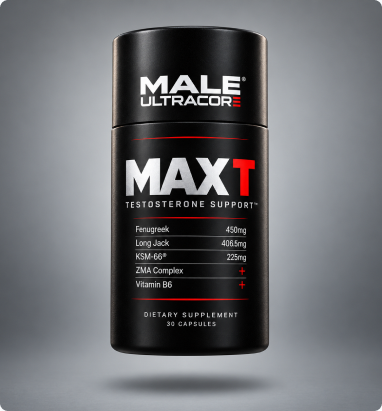
Max T is another testosterone-support option to compare with TestoPrime Original. Start with the complete current daily serving, the actual ingredient forms, the capsule or tablet routine and any overlap with what you already take. A familiar herb name on both labels does not make the preparations identical. Practical differences can matter even when a clinically superior choice has not been established.
Our commercial recommendation is to explore Max T as a category-relevant alternative and inspect its current product information before buying. No head-to-head trial establishing greater testosterone improvement than TestoPrime Original was identified in this research. The same standard applies to both options: ingredient research is context, a readable label helps comparison, and neither by itself proves that a supplement will address your symptoms. The recommendation is a promotional next step, separate from the assessment of TestoPrime Original.
The balanced verdict on original TestoPrime
Original TestoPrime is most informative when assessed as its actual twelve-ingredient panel rather than a collection of large marketing equivalents. Its disclosure allows genuine scrutiny, but the research boundary, zinc total and extract-dose distinctions are material limitations. Regulatory-sounding facility claims do not establish FDA approval of efficacy, and natural is not synonymous with universally safe.
A careful buyer may find the formula worth comparing once the current original label, medication context and total routine are clear. Someone seeking diagnosis or treatment of low testosterone needs an appropriate clinical assessment instead of relying on promotional symptom language. The final recommendation should keep that distinction visible while offering Max T as a separately identified commercial option to examine, with no invented personal experience or unsupported promise of superiority.
Original and Gold should remain separate purchase decisions
A prominent Gold promotion does not change what the original TestoPrime label contains. The two offers need their own facts, serving details and purchase terms. Comparing a newer premium claim with an older original-product panel can create a misleading hybrid that describes neither bottle accurately. That is especially important when a buyer arrives through a general brand search rather than a specific product name.
For the original version, the actual extract quantities and nutrient totals are more useful than a general impression of potency. The label allows those numbers to be examined; the powder equivalents need to be kept in their own category. A reader can reasonably value that disclosure while still deciding that the combination or routine is not the best fit. Conversely, liking the format does not establish a clinical result. The precise version, current panel and intended goal all need to line up before a meaningful comparison with Max T is possible.
A confident purchase needs a realistic definition of success
A supplement decision becomes clearer when success means something more specific than youthful vitality. A person may want to clarify fatigue, compare hormone results or simplify a routine. Those goals demand different information, and a twelve-ingredient formula cannot establish which problem exists. The marketing’s range of possible benefits should not make those separate questions disappear.
For original TestoPrime, the absence of an identified finished-product trial means the outcome remains uncertain even when individual components have research histories. A buyer can accept that uncertainty and still compare the product, but there is no reason to translate uncertainty into a guarantee. It is equally unfair to use the evidence limits as proof that another product necessarily succeeds. A sound final decision weighs the actual formulation, total intake, tolerability questions, current terms and a clear reason for use, with appropriate clinical assessment when symptoms persist or a hormone disorder is suspected.
What tolerability can and cannot tell you
Feeling comfortable with a product is a practical advantage; it is not proof that the advertised biological effect occurred. Conversely, an unwanted reaction does not necessarily establish that an entire ingredient category is unsuitable for everyone. Keep those questions separate when reading reviews. A published-label assessment can identify relevant ingredients, serving information and known cautions, but it cannot predict how a particular reader will respond or replace an individualized discussion about recurring symptoms.
When comparing options, pay attention to the total routine rather than evaluating each bottle in isolation. Another product may change the format without answering the same scientific question, or it may use a similar ingredient in a different preparation. The promotional recommendations here identify an owned product in the relevant category, with a link to review its current details. They do not guarantee easier digestion, better absorption or superior efficacy compared with the competitor.
How to compare TestoPrime Original with Max T
Start with the actual goal rather than a presumed winner. TestoPrime Original and Max T deserve a comparison of their present product or service details, the kind of evidence available and the practical routine involved. Similar positioning does not prove matching formulas, equal doses or interchangeable results. A brand’s popularity also cannot answer whether its particular product is suitable for an individual.
Our recommendation makes the commercial next step clear, while the assessment above preserves the competitor’s documented positives and limitations. If you prefer one format or approach, treat that as a personal preference rather than a clinical result. Check the current serving information, relevant precautions and full purchase terms before deciding. Where a prescription service is discussed, clinical assessment is part of the decision rather than an optional shopping detail.
The verdict: choose for fit, evidence and a realistic routine
The strongest reason to consider TestoPrime Original is the combination of documented features described in this review and a goal that actually matches its category. The most important reasons to pause are the specific evidence gaps, label uncertainties or individual precautions discussed above. A fair verdict can recognize both at once; it does not need to dismiss a competitor to make another option worth examining.
For a category-matched next step, the recommendation below highlights Max T from our range. Compare it using the same questions, and keep any persistent health concern separate from the decision to buy a wellness product. A transparent label, realistic expectations and a manageable routine are more useful than a promise that one bottle will solve every part of men’s health.
Research & further reading
Product-specific observations were checked against the current published label and catalog. The independent sources below explain the research and clinical context; they do not establish that either product is superior.
- D-aspartic acid with resistance training: randomized controlled trial
- Ashwagandha: Usefulness and Safety — NCCIH
- Examining the effect of Withania somnifera supplementation on muscle strength and recovery: a randomized controlled trial
- Zinc Fact Sheet for Consumers — NIH Office of Dietary Supplements
- Fenugreek: Usefulness and Safety — NCCIH
- Do testosterone boosters really increase serum total testosterone? A systematic review
- Hypogonadism in Men — Endocrine Society
- Green Tea: Usefulness and Safety — NCCIH
Continue reading
Our Max T review · More on testosterone · All product reviews