Gorilla Mind Sigma Review: Ingredients & Tolerability
Gorilla Mind Sigma ingredients and tolerability: Vitamin D3, format, label details and relevant precautions. Read the strengths and limitations.
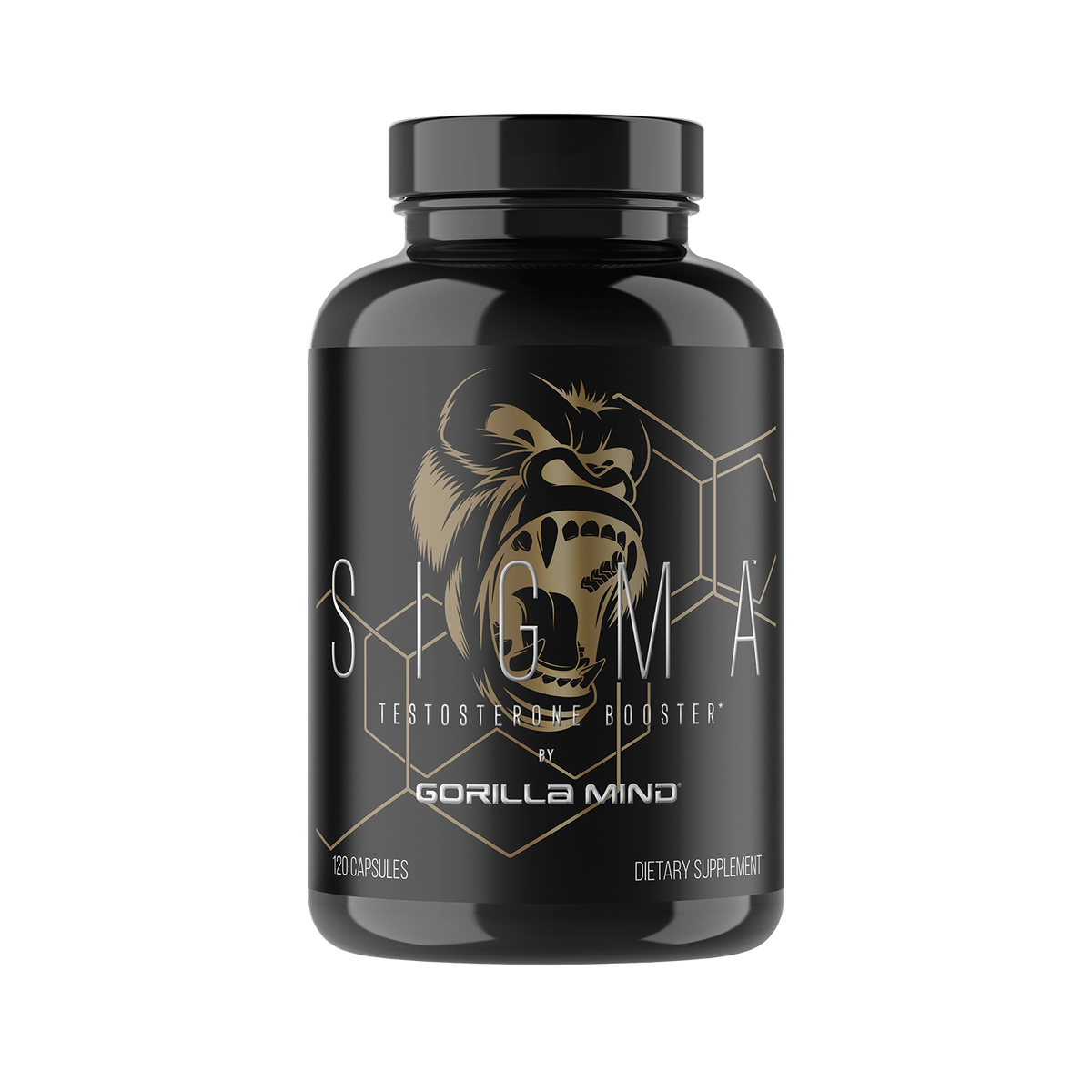
Gorilla Mind Sigma is a testosterone-support formula built around minerals, vitamin D, tongkat ali, ashwagandha, boron and Fadogia agrestis. It is designed for readers already interested in hormone-support supplements and willing to look beyond a one-ingredient capsule. The manufacturer provides an unusually detailed explanation of its rationale, along with individual ingredient-testing links and a long discussion of the research. That makes Sigma a useful product to examine carefully rather.
Published-label and research assessment. We checked current catalog information, available Supplement Facts images and linked scientific sources. No personal use, independent laboratory testing or head-to-head trial is claimed. Two promotional recommendations concern products or services sold by the owner of this publication.
Is Gorilla Mind Sigma the right fit for your goal?
Gorilla Mind Sigma is worth evaluating for its actual formula and current label, rather than its reputation alone. This review looks at format, ingredients and tolerability: what is documented, where the evidence is limited, and which practical questions matter before a purchase. The aim is a useful decision, not a score assembled from promotional claims.
We also identify Myogentra as a category-matched option from our own range in two clearly marked recommendation sections. That commercial relationship does not change the evidence standard applied to Gorilla Mind Sigma. Genuine strengths are acknowledged, unresolved details stay unresolved, and no hands-on testing or clinical superiority is invented.
Sigma makes a strong, specific proposition
Gorilla Mind Sigma is a testosterone-support formula built around minerals, vitamin D, tongkat ali, ashwagandha, boron and Fadogia agrestis. It is designed for readers already interested in hormone-support supplements and willing to look beyond a one-ingredient capsule. The manufacturer provides an unusually detailed explanation of its rationale, along with individual ingredient-testing links and a long discussion of the research. That makes Sigma a useful product to examine carefully rather than judge from its black-and-gold bottle alone.
Fadogia is not supported by the same body of human evidence as familiar nutrients or some standardized botanicals. A formula can be transparent about what it contains while still asking users to accept substantial scientific uncertainty. An honest assessment should acknowledge both sides: the label is informative, but the presence of an intriguing ingredient does not establish a useful or safe clinical effect in people.
Two capsules and four capsules are different purchases
The bottle contains 120 capsules, and the Supplement Facts panel presents two dosage columns. Two capsules provide sixty servings, while four capsules turn the same bottle into thirty daily servings. That distinction changes the daily cost, the amounts of every ingredient and the level of overlap with other supplements.
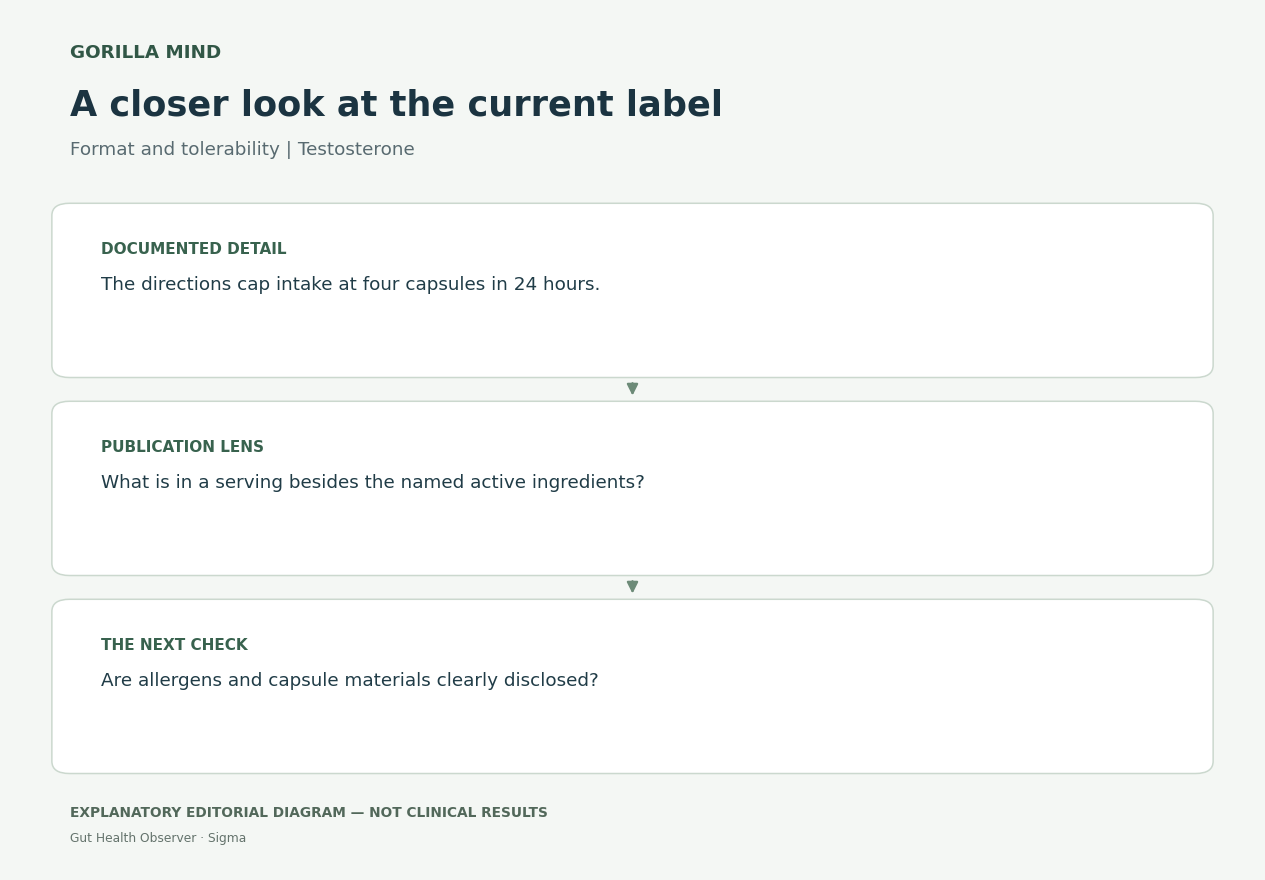
At two capsules, the displayed panel lists 300 mg tongkat extract, 300 mg Fadogia, 250 mg KSM-66 ashwagandha, 15 mg zinc, 20 mg magnesium and 5 mg boron. Vitamin D3 is displayed as 38 mcg, corresponding approximately to 1,500 IU after label rounding. The four-capsule column increases those amounts. The manufacturer’s instructions allow two to four capsules spread through the day, with a maximum of four capsules in twenty-four hours. Those are directions to report accurately, not a reason to choose a higher dose for a reader.
The two Sigma columns also show why a single headline milligram figure is inadequate. Four capsules double the botanical exposure and increase the nutrient amounts, but they do not guarantee twice the benefit. The label allows a comparison of exposure, not a prediction of response. Someone considering the smaller serving needs to assess that actual regimen rather than borrow results or claims attached to the larger amount. The same bottle can therefore look very different in a price-per-day calculation depending on which column is being discussed.
Standardization is a genuine label advantage
Sigma identifies its tongkat extract as standardized to one percent eurycomanone and its KSM-66 ashwagandha root extract as standardized to five percent withanolides. Those details make the formula easier to compare than one that merely lists a plant name. Extract amount and marker concentration are different pieces of information, and both are relevant when a manufacturer connects a supplement to published research.
That specificity should not be turned into a simple more-is-better claim. A higher percentage of a marker does not automatically produce a better overall clinical response, and studies of one standardized extract do not validate every mixture containing it. KSM-66 also does not cancel the uncertainty surrounding Fadogia or prove the complete Sigma blend effective. The practical advantage is that the label gives a knowledgeable reader more to work with. It reduces one kind of uncertainty, the identity and stated strength of some ingredients, while leaving the clinical-outcome question open.
Fadogia is the central evidence limitation
Fadogia agrestis is often discussed online as though animal findings establish a reliable testosterone effect in men. They do not. The retrieved literature includes animal research, including a rat study reporting adverse changes in testicular-function indices after a particular aqueous stem extract. That finding cannot be translated directly into a claim that Sigma causes the same harm in humans. It also cannot responsibly be ignored while promoting the ingredient as a proven upgrade.
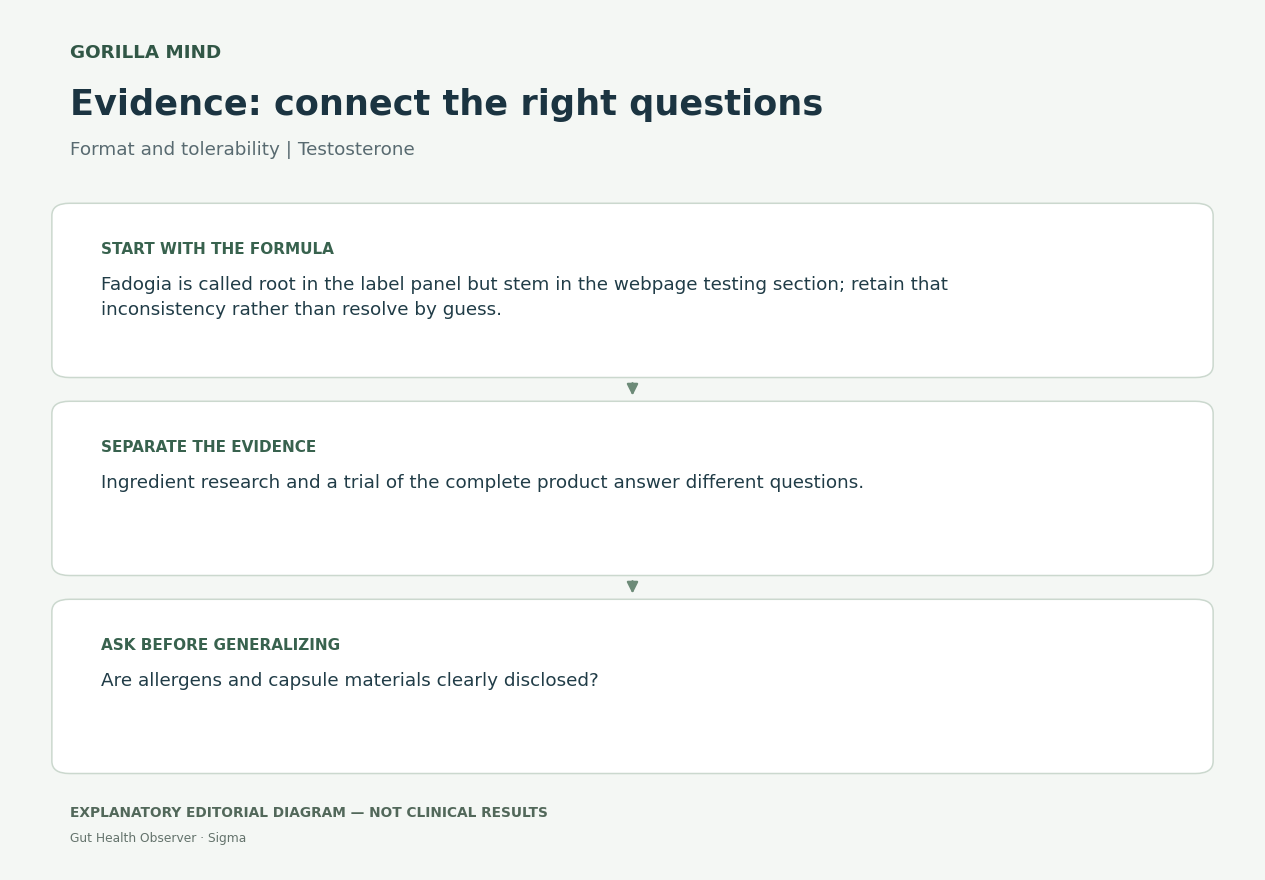
The sensible conclusion is uncertainty, especially around human efficacy, longer-term safety, extract comparability and dose. Another complication is that the current label panel calls the Fadogia ingredient root, while the webpage’s testing heading calls it stem. Laboratory verification of a sample’s identity or contaminants would still be a different question from whether taking that plant preparation improves a person’s health. Sigma’s Fadogia component therefore deserves a prominently qualified discussion, not a footnote.
The serving format deserves its own review
Ingredients receive most of the attention in supplement advertising, but the delivery format can shape the everyday experience. Capsules, tablets, powders, chews and gummies differ in serving size, swallowing burden, additional ingredients and ease of use. For Gorilla Mind Sigma, look at the current directions and the whole label, including sweeteners, fillers and declared allergens. The word natural does not answer a tolerability question, and a vegetable capsule does not guarantee that the full formula is suitable for every dietary restriction.
The most useful routine is one you can follow safely and consistently. Do not assume that taking extra servings improves the experience or the result. It increases exposure to everything in the formula, including ingredients that may already appear in another supplement. Where food instructions or other precautions are stated, treat them as part of the product rather than optional fine print. Individual reactions can differ, so label-based expectations should remain realistic.
What a testosterone-support comparison should establish
A useful testosterone-support review distinguishes normal nutritional support from treatment of a hormonal disorder. A formula may combine minerals, vitamins and botanicals with different kinds of evidence. Some research concerns people with low baseline levels or a particular deficiency; other studies examine selected extracts in small groups. Neither situation justifies promising the same result to everyone. Ingredient research is relevant context, but the complete product, preparation, dose and study population still matter.
More ingredients also mean more comparison work. Check what is individually disclosed, what sits inside a blend and what overlaps with other products. Extract ratios and herb-equivalent numbers need careful reading. A plant name shared between two formulas does not establish matching exposure, and a larger headline quantity does not settle efficacy. If two sources disagree about the current formula, the disagreement should remain visible until the manufacturer resolves it.
For a reader deciding whether to buy, the reasonable conclusion is specific rather than universal. Evaluate the product’s documented strengths, unresolved questions and fit with a realistic routine. If symptoms suggest a possible hormonal issue, discuss appropriate evaluation instead of treating a supplement as a substitute for diagnosis. Our category-matched recommendation offers another label and purchase option to assess; it does not establish that an owned formula raises testosterone more effectively or treats clinically low testosterone.
The minerals need context rather than hype
Vitamin D, zinc and magnesium are important nutrients, but being necessary for normal physiology does not mean extra amounts improve testosterone in every well-nourished man. Sigma’s label allows readers to count what they are adding, which is useful. The four-capsule amount of zinc is 30 mg before considering food, a multivitamin or another supplement. The general adult upper intake level is 40 mg daily, making total intake a more practical concern than whether a label advertises a high percentage of the daily value.
The magnesium amount is much smaller than a full daily requirement, so Sigma should not be described as a comprehensive magnesium supplement. Boron is also present at an amount that adds up when products are stacked. These observations do not prove the formula is unsuitable for everyone. Nutrient adequacy, an identified deficiency and an unexplained symptom are three different issues.
The Fadogia uncertainty cannot be canceled by the better-described parts of the formula. Zinc has established nutritional functions, and KSM-66 has a human research trail, but those facts do not establish the long-term safety of a separate botanical in the same capsule. The important distinction is not whether an ingredient is natural; it is what evidence exists for the exact preparation and use. The animal literature raises questions that need human investigation, while the root-versus-stem inconsistency adds a product-identification question. Both issues are more informative than an unqualified experimental-ingredient claim.
The cycle and testing claims have clear limits
The manufacturer recommends daily use for one month followed by at least one week off. Reporting that instruction is appropriate. Claiming the cycle has been proven to prevent every possible adverse effect would go much further than the evidence verified here. A suggested break does not solve the absence of robust human safety data for a less-studied botanical, and it should not be used as a reassuring substitute for that information.
The product page also links to testing for several ingredients. Public testing documentation is preferable to asking buyers to trust a logo without detail, but identity, purity and potency tests do not establish testosterone outcomes. The California warning referring to lead and mercury should likewise be described accurately without jumping to an unsupported conclusion about a particular user’s exposure. The right questions are which lot was tested, what analytes and specifications were used, and whether the report matches the product being evaluated. Clinical efficacy remains a separate question.
Who needs a closer suitability check
Ashwagandha can matter for thyroid conditions, liver problems, autoimmune conditions, sedatives and hormone-sensitive disease. The presence of a standardized extract is useful for identification, but it does not remove those considerations. People seeking to address infertility or diagnosed low testosterone should not assume that a supplement designed around those concepts has been shown to treat their condition.
The product also should not be treated as a shortcut for persistent fatigue, low desire or erectile problems. Those experiences can have several explanations, including sleep, medication effects and cardiometabolic issues. It would be misleading to discuss Sigma’s evidence uncertainties at length, then promise that Myogentra or Max T will fix the same symptoms without equivalent supporting evidence.
A useful personal decision starts with the intended outcome. A man looking for a laboratory-confirmed testosterone change is asking a different question from someone hoping for better sleep or a stronger training session. Sigma’s formula and marketing touch several of those themes, but success in one domain cannot be assumed from another. A repeatable measurement and an understanding of baseline health provide more information than comparing how energized someone feels after starting several products at once. Hormone-related symptoms also need context before a supplement is treated as the solution.
A balanced verdict can still be decisive
Sigma’s strengths are its detailed dose disclosure, named standardized extracts, public research discussion and accessible ingredient-testing links. Its most important limitation is the leap between a mechanistic formula story and demonstrated outcomes from the finished product, especially with Fadogia in the blend. A reader who wants a straightforward supplement with extensive human safety experience may view that uncertainty differently from an enthusiast attracted to experimental ingredients.
What tolerability can and cannot tell you
Feeling comfortable with a product is a practical advantage; it is not proof that the advertised biological effect occurred. Conversely, an unwanted reaction does not necessarily establish that an entire ingredient category is unsuitable for everyone. Keep those questions separate when reading reviews. A published-label assessment can identify relevant ingredients, serving information and known cautions, but it cannot predict how a particular reader will respond or replace an individualized discussion about recurring symptoms.
When comparing options, pay attention to the total routine rather than evaluating each bottle in isolation. Another product may change the format without answering the same scientific question, or it may use a similar ingredient in a different preparation. The promotional recommendations here identify an owned product in the relevant category, with a link to review its current details. They do not guarantee easier digestion, better absorption or superior efficacy compared with the competitor.
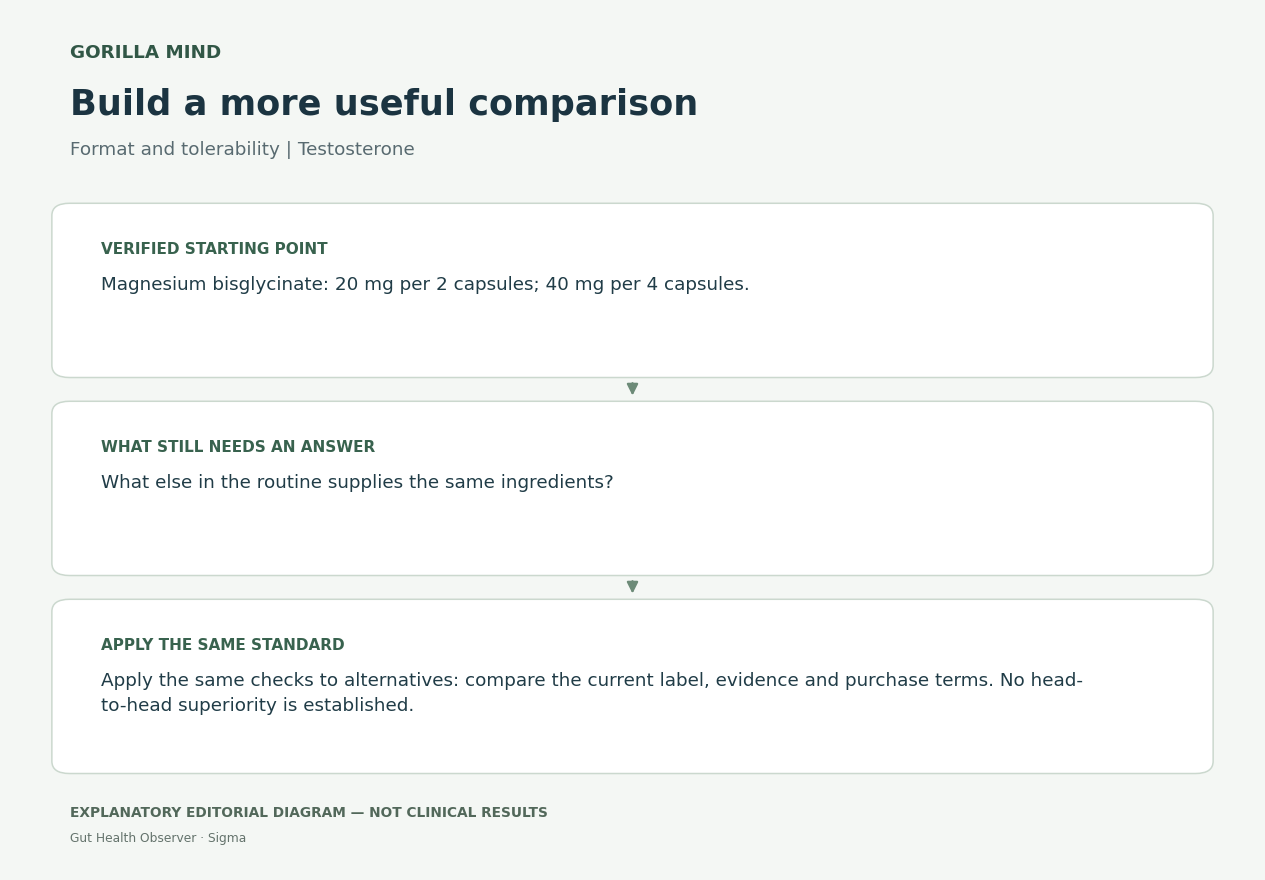
How to compare Gorilla Mind Sigma with Myogentra
Start with the actual goal rather than a presumed winner. Gorilla Mind Sigma and Myogentra deserve a comparison of their present product or service details, the kind of evidence available and the practical routine involved. Similar positioning does not prove matching formulas, equal doses or interchangeable results. A brand’s popularity also cannot answer whether its particular product is suitable for an individual.
Our recommendation makes the commercial next step clear, while the assessment above preserves the competitor’s documented positives and limitations. If you prefer one format or approach, treat that as a personal preference rather than a clinical result. Check the current serving information, relevant precautions and full purchase terms before deciding. Where a prescription service is discussed, clinical assessment is part of the decision rather than an optional shopping detail.
The verdict: choose for fit, evidence and a realistic routine
The strongest reason to consider Gorilla Mind Sigma is the combination of documented features described in this review and a goal that actually matches its category. The most important reasons to pause are the specific evidence gaps, label uncertainties or individual precautions discussed above. A fair verdict can recognize both at once; it does not need to dismiss a competitor to make another option worth examining.
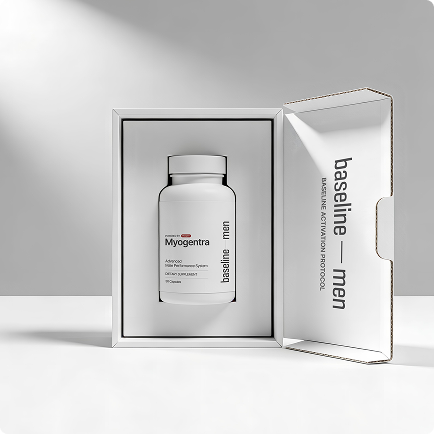
For a category-matched next step, the recommendation below highlights Myogentra from our range. Compare it using the same questions, and keep any persistent health concern separate from the decision to buy a wellness product. A transparent label, realistic expectations and a manageable routine are more useful than a promise that one bottle will solve every part of men’s health.
Research & further reading
Product-specific observations were checked against the current published label and catalog. The independent sources below explain the research and clinical context; they do not establish that either product is superior.
- Systematic review of proposed testosterone boosters
- Eurycoma longifolia and serum testosterone: systematic review and meta-analysis
- NCCIH: Ashwagandha usefulness and safety
- Fadogia stem extract and testicular function indices in male rats
- NIH ODS: Zinc health professional fact sheet
- NIH ODS: Boron health professional fact sheet
Continue reading
Our Myogentra review · More on testosterone · All product reviews